Online order
Order SO/2207 Hair mask, 2 jars
- FromOwn store, Pune 411014
- PaymentCOD, ₹1,148
- StockReserved from one count, all channels
- ShippedAWB 7740 1182, 9 Nov
- PaidCOD remitted 14 Nov, matched

A COD order isn’t a sale until the money lands, and a return isn’t stock until someone checks it.
Tell us how you runOnline order
Contract fill
Marketplace
Return

Batches and expiry dates on every order shipped. Contract fillers run as subcontractors, with your packaging counted at their plant.

Sizes and colours as variants, with one stock count for every channel. Returns graded and restocked the day they arrive.

Short shelf lives, so orders ship first-expiry-first-out. Repeat customers billed on subscription.

Kits built from components, so selling one box takes each item out of stock. Packaging counted as stock too.
Follow one cash-on-delivery order through Odoo. Every step writes to the same order, so the money the courier owes you is matched, not guessed.
The store order arrives as a sale order and reserves stock. Every channel sees the new count.
 Sales
 SO/2207Confirmed
Orders are picked in batches and scanned into the box. A wrong item is caught at the scan.
 Barcode
 WH/PICK/01184Done
The GST invoice is raised before dispatch, with IGST for a customer in another state.
 Accounting
 INV/2026/1184Posted
The courier label and tracking number print from the delivery. The customer gets the link.
 Inventory
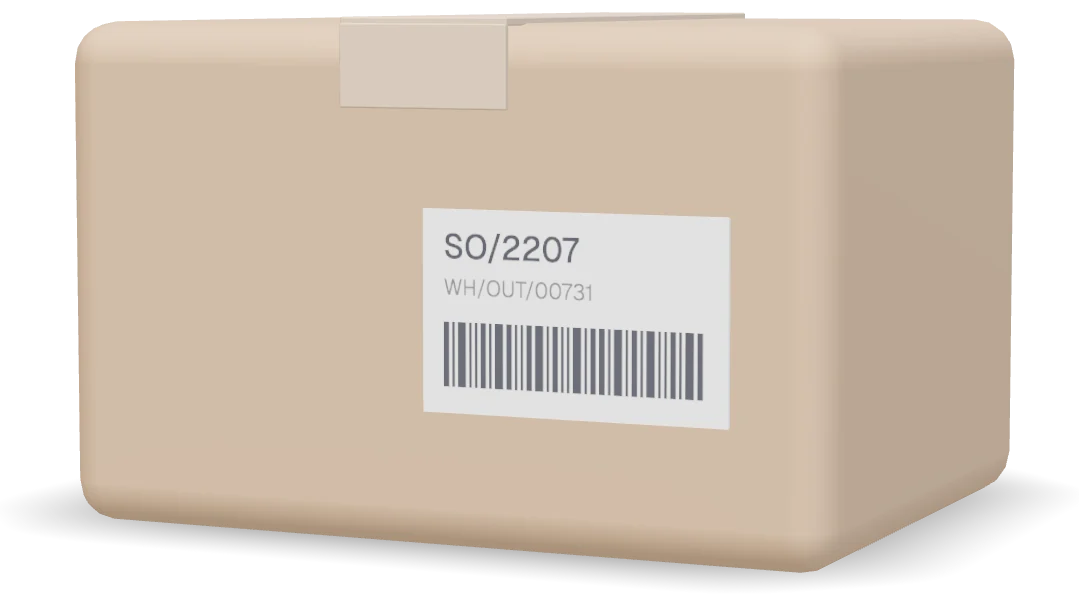 WH/OUT/00731Delivered
The courier’s remittance is matched order by order. Fees are booked, and anything missing shows.
Accounting BNK/2026/0412Reconciled
The return is received against its order and graded. Good stock is sellable again the same day.
Inventory RET/0118Done
COD orders come back undelivered, and the freight both ways is never charged to them.
Book RTO freight against each order, and report it by pincode and channel.
Once you can see which pincodes come back, you can switch COD off there. This needs some set-up.
 Dashboards
The courier pays a lump sum, less fees, and the gap is never traced to orders.
Reconcile each remittance against its orders in Accounting.
Missing COD is usually a handful of orders, but you only find them order by order.
Accounting
The marketplace still shows stock that a store order took an hour ago.
Keep one stock count in Odoo and push it to every channel.
Here the connector matters as much as the ERP. Pick one that syncs often and logs its failures.
Inventory
Returned parcels sit unopened in a corner while the item shows out of stock.
Receive every return against its order, graded, the day it arrives.
A returned jar is stock again in minutes, or a write-off in a month.
Barcode
Your packaging and raw material sit at the contract filler’s plant, known only from their reports.
Run the filler as a subcontractor, with your material as stock at their location.
Then every batch they deliver draws down what you sent, and the gap is visible.
 Purchase
Commission, shipping and penalties are deducted before the money reaches you.
Post each settlement with its fees split out against the orders.
Net margin by channel often looks very different from the gross. Decide where to sell on the net.
Accounting
Live in 8–14 weeks. Nothing switches off until your books agree.
Where most brands we meet start. The store stays; stock, orders and accounts move to Odoo underneath it.
What moves across
Orders in one tool, books in another, matched by hand. Odoo puts them on one record.
What moves across
Set up right before the order volume makes it hard. Channels, couriers and GST from the first order.
What moves across
Yes, through a connector app; Odoo has no Shopify connector of its own. Orders come in as sale orders, and stock and tracking numbers go back to the store.
Odoo Enterprise has an Amazon connector. Other marketplaces connect through third-party connectors or an order aggregator, which we choose with you based on your channels.
Yes. COD orders are invoiced as usual, and each courier remittance is reconciled against the orders it pays for, with the fees booked separately.
Odoo has standard integrations for international carriers. Indian couriers and shipping aggregators connect through an app or a small integration; either way the label and tracking number sit on the delivery.
A return is received against its delivery and graded, with good stock going back on sale. Customer returns get a credit note; RTO freight can be charged to the order with some set-up.
Yes. Place of supply decides CGST and SGST or IGST on each invoice, and B2C sales by state flow into GSTR-1 from the same books.
Yes. The Subscriptions app in Enterprise bills repeat customers on their schedule, with the delivery raised each cycle.
You can. Odoo eCommerce runs on the same database as your stock and books, so there is no connector to keep in sync. Whether to move depends on how much your store relies on Shopify apps.
Question not here? WhatsApp us.
A senior consultant reads every note and replies personally.
Or call +91 79750 29997 or WhatsApp us