Central kitchen
CK-0412 Dal makhani, 40 kg
- Made8 Nov, central kitchen, Bommasandra
- RecipeUrad dal 12 kg, butter, cream, spices
- Cost₹3,840, so ₹96 a kg
- SentIndiranagar 18 kg, Whitefield 22 kg
- ReceivedBoth confirmed, Whitefield 0.5 kg short

What a plate really cost today, at this outlet, at today’s onion price.
Tell us how you runCentral kitchen
Banquet booking
Bar, by the glass
Café counter

Every dish costed from its recipe, so food cost is known per plate. Floor plans, table orders and a kitchen display at each outlet.
Fast counter billing that keeps going offline. Milk, beans and cups drawn off stock with every order.
Bought by the case, stocked by the bottle, sold by the glass or peg. A weekly bar count shows what was poured and not billed.
Each function an order with its menu, covers and advance. Food and beverage cost against what was billed, event by event.
Follow one batch of dal makhani through Odoo. Every step writes to the same stock and recipes, so the gap between what food should cost and what it did is a report, not a guess.
The central kitchen buys for every outlet, from their requisitions and par levels.
 Purchase
 PO/0388Confirmed
Goods are weighed and checked at the door. What was short goes on the bill, not into stock.
 Inventory
 Quality
 WH/IN/00412Done
The batch draws its ingredients from the recipe. Its yield and cost per kg post when it closes.
 Manufacturing
 MO/0731Done
Each outlet gets its share by internal transfer, and confirms what arrived.
Inventory INT/0731Done
The table order goes to the kitchen display. Every plate sold takes its recipe off stock.
 Point of Sale
 T12/0087Paid
The weekly count is compared with what the recipes say was used. The gap is the number to act on.
Inventory Dashboards
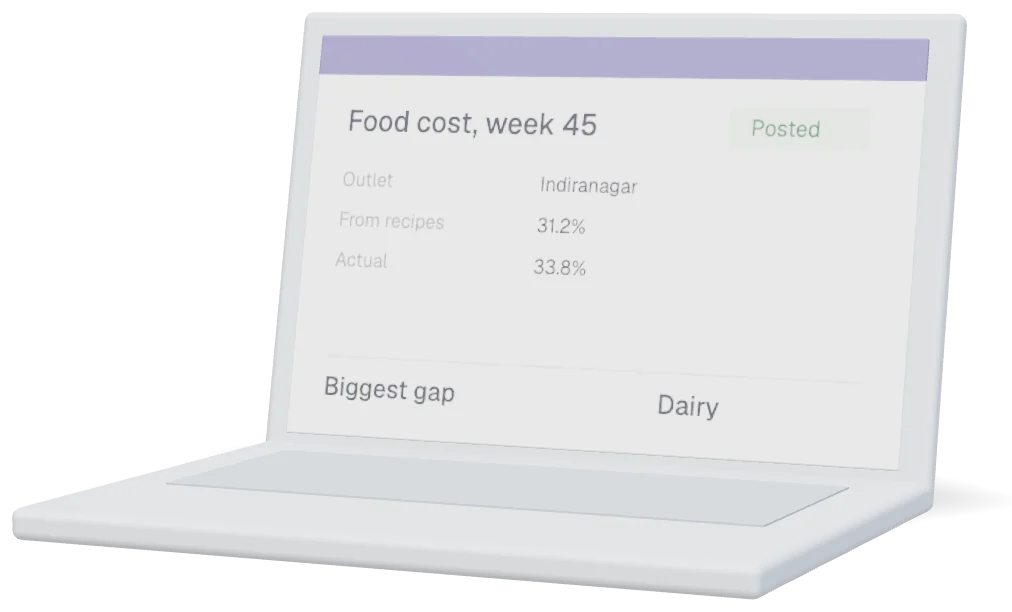 Food cost, week 45
The P&L shows food cost went up; nobody can say which dish or which outlet.
Cost every dish from its recipe, and compare it with the stock count every week.
The gap between what food should have cost and what it did is the number a chef can act on.
Manufacturing
An opened bottle loses pegs nobody rang up.
Stock liquor by the bottle and sell by the peg, so every pour comes off stock.
Then the weekly bar count shows the gap in pegs, shift by shift.
Point of Sale
The kitchen says it sent 22 kg; the outlet says it got 18.
Send every batch by internal transfer, and have the outlet confirm what it received.
A difference recorded on the day can be explained. A month later it can only be written off.
Inventory
Each manager phones suppliers, at their own price, for their own kitchen.
Buy centrally, from outlet requisitions and par levels.
One buyer with each outlet’s real usage gets better prices and fewer emergencies.
Purchase
Spoilt prep and returned plates go in the bin, not the books.
Record wastage as scrap, with a reason, at each outlet.
Wastage by reason and outlet tells you whether the problem is prep, storage or the menu.
Inventory
Aggregators pay weekly, net of commission, discounts and penalties.
Post each payout against its orders, with the deductions split out.
Delivery orders often earn less than they appear to. You only see it order by order.
 Accounting
Live in 8–14 weeks. Nothing switches off until your books agree.
Where most chains we meet start. Billing works, but recipes, stock and food cost live in Excel.
What moves across
A chef’s costing sheet is the best starting point there is. It becomes the bill of materials for each dish.
What moves across
The PMS keeps running the front office. Odoo takes the outlets, stores, purchase and books, and the two are connected.
What moves across
Yes. Each dish has its recipe as a bill of materials, with yields and sub-recipes such as gravies and bases, so the cost per plate updates when ingredient prices change.
Yes. Restaurant Point of Sale has floor plans, table orders, split bills and courses, and orders go to the kitchen on a printer or a kitchen display screen.
Yes. The outlet keeps billing when the internet drops and syncs when it is back.
Yes, with some set-up. The bottle is stocked in millilitres and each peg is a menu item that draws its measure off stock, so the bar count can be compared with sales.
Yes. Batches are cooked as manufacturing orders and sent to outlets by internal transfer, each outlet confirming what it received.
They can, through an aggregator integration that brings delivery orders into Point of Sale. We check which one suits your outlets and versions before setting it up.
No. Standard Odoo has no hotel front office for rooms and reservations. We keep the PMS and connect it to Odoo, which runs the outlets, stores, purchase and accounts.
Yes, through Odoo’s Indian localisation. Tax rates are set per product and outlet, so each outlet bills at its correct rate, and returns come from the same books.
Yes. We’ve moved groups off SAP and other ERPs. Masters and open balances come across, you run one month-end side by side, and you switch when the numbers agree. Planning shows where Odoo fits as it is and where it needs building.
Question not here? WhatsApp us.
A senior consultant reads every note and replies personally.
Or call +91 79750 29997 or WhatsApp us