
Odoo ERP for food, beverage & dairy
If one batch goes wrong, you know which trucks carried it before the phone rings.
Tell us how you runPoint at a product to trace its lot.
What Odoo keeps track of, trade by trade.
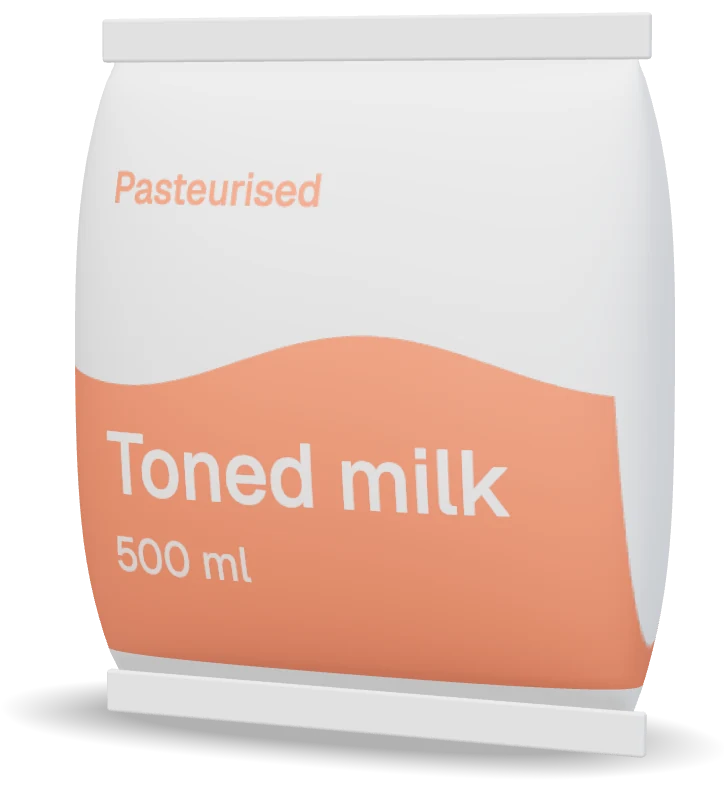
Dairy
Fat and SNF on every receipt, from the farmer or the tanker. Shelf life is counted in days, so expiry runs the cold store.
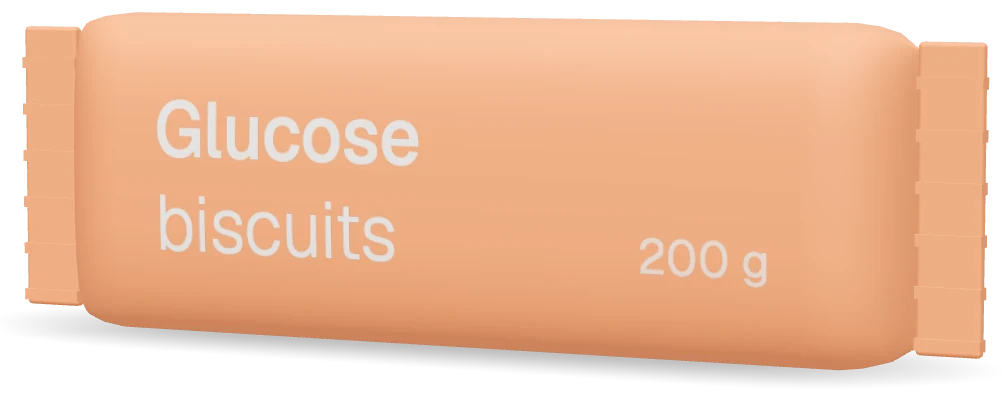
Bakery & snacks
Recipes with their yield and loss, and the film and cartons kept as stock. One product in many pack sizes.
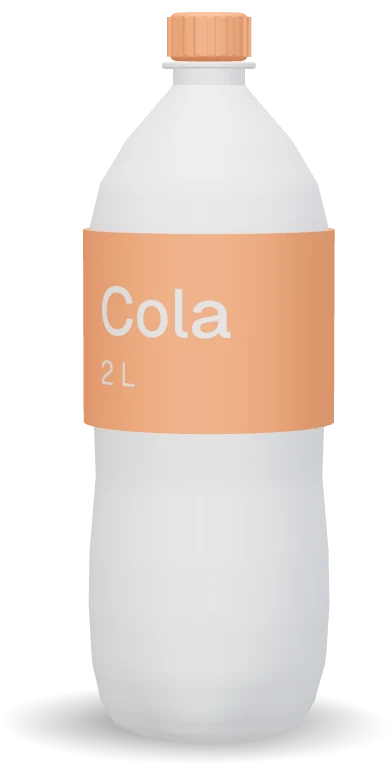
Beverages
Every bottling batch carries its lot. Crates and bottles that come back are counted by customer, with their deposits.
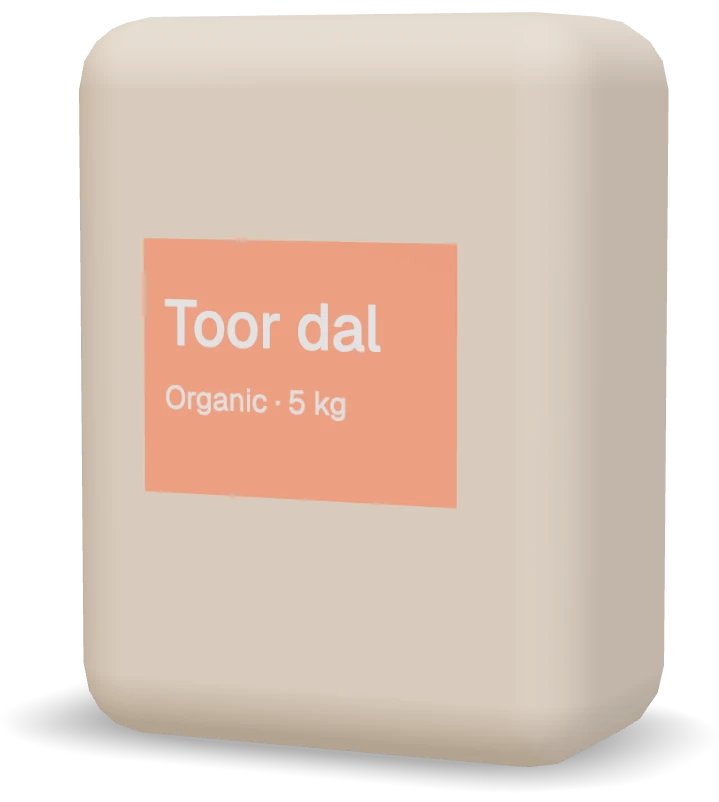
Packaged staples & organic
Organic and conventional lots kept apart, each with its certificate. Distributor schemes on every pack size.
From the tanker to the invoice, one record.
Follow one lot of milk through Odoo. Every step writes to the same record, so a recall is a search, not a round of phone calls.
- 01
Receive
Milk is tested at the dock. A failed test never becomes stock.
 Inventory
 Quality
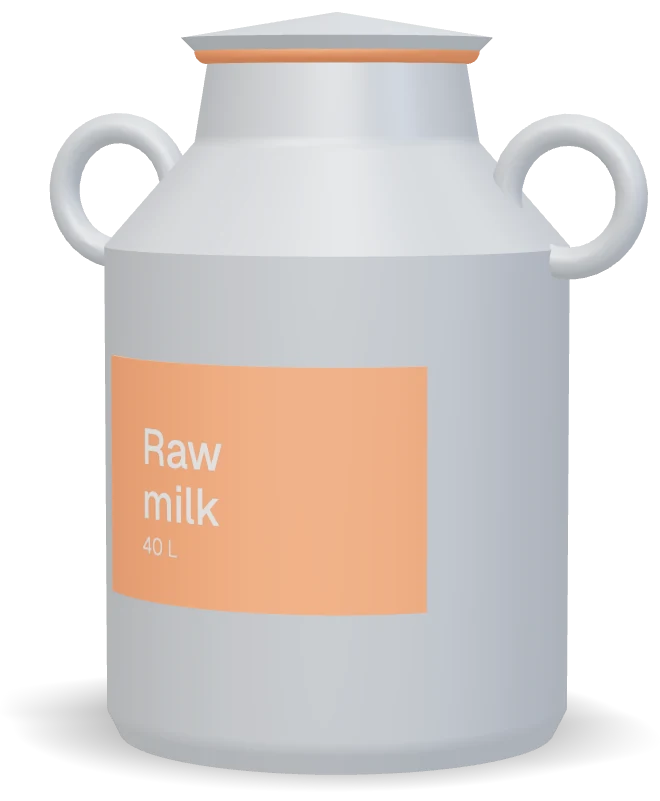 WH/IN/00412Done
- Product
- Raw milk
- Quantity
- 4,200 L
- Lot
- P00218
- Fat
- 4.1% Pass
- SNF
- 8.6% Pass
- 02
Make
The batch draws its milk by lot. Yield posts when it closes.
 Manufacturing
 MO/0731Done
- Product
- Paneer
- Milk used
- 1,200 L
- From lot
- P00218
- Produced
- 236 kg
- Yield
- 19.7 kg per 100 L
- 03
Pack
Each pack gets its lot, expiry and MRP at the line, and its own weight.
- Manufacturing
 Barcode
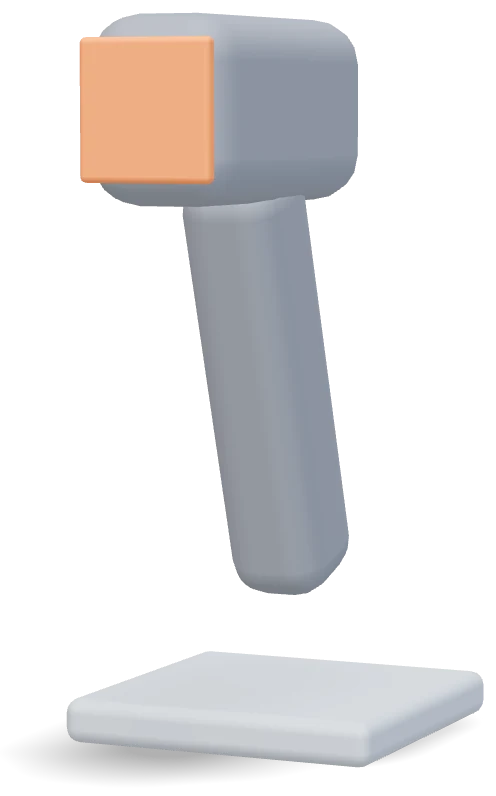 Paneer, by weight
- Lot
- PN-0412
- Net weight
- 0.982 kg
- Use by
- 9 Nov 2026
- MRP
- ₹412
- 04
Store
Stock leaves first-expiry-first-out by rule, not by memory.
- Inventory
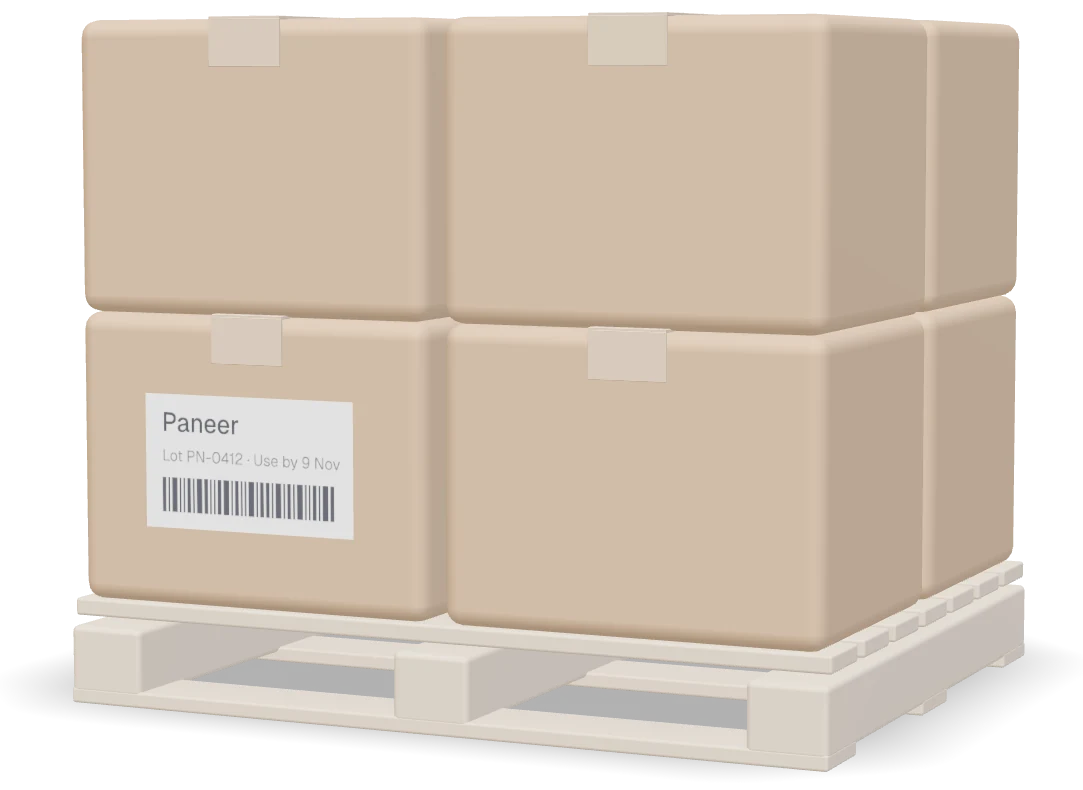 Paneer in cold storePN-0409use bytodayPN-0410use by8 NovPN-0412use by9 NovRemoval: first expiry, first out
- 05
Sell & dispatch
Distributor prices and schemes apply on the order. The delivery records its lots.
 Sales
- Inventory
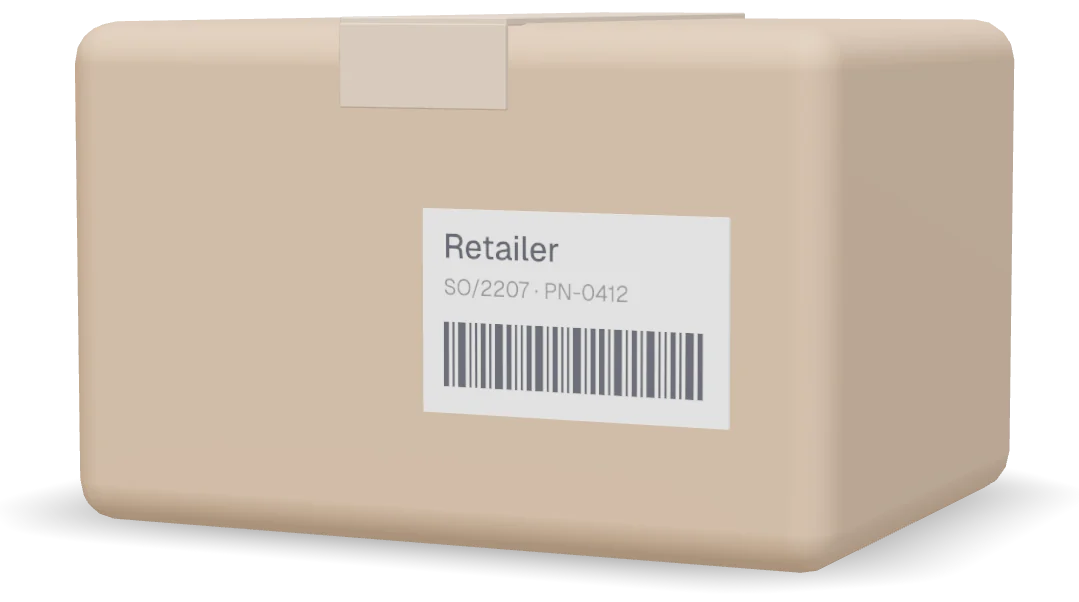 SO/2207Delivered
- Customer
- Retailer
- Paneer
- 10 + 1 free
- Lots shipped
- PN-0412 TM-0412
- 06
Bill & collect
The GST invoice and e-way bill come from the delivery. Late payers are flagged before the next order.
 Accounting
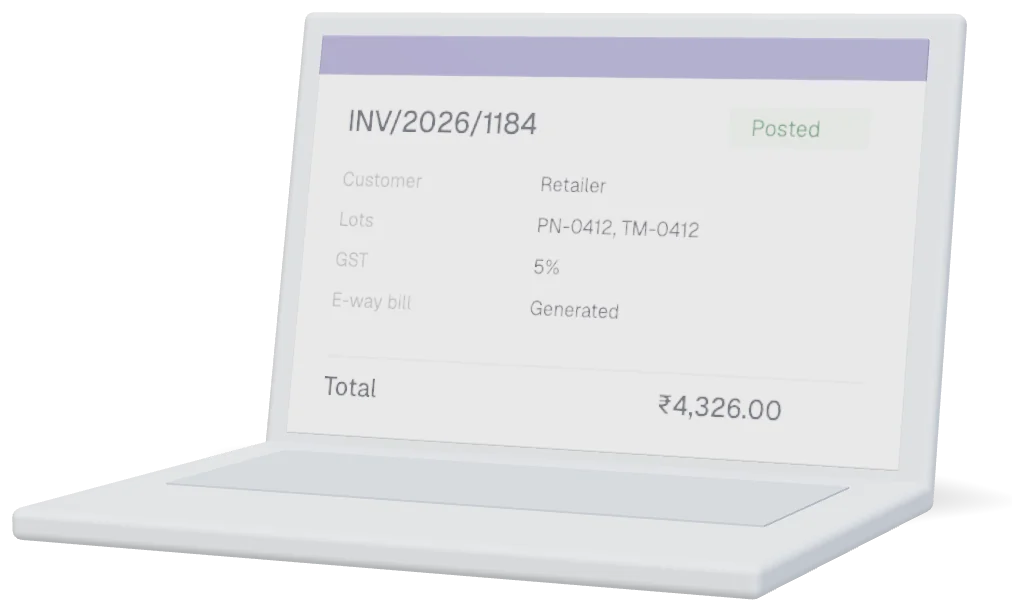 INV/2026/1184Posted
- Customer
- Retailer
- Lots
- PN-0412 TM-0412
- GST
- 5%
- E-way bill
- Generated
- Due
- 7 Dec 2026
Where food businesses lose money, and what we’d do.
Expiry found at the stock count.
A tray of curd, a carton of biscuits: nobody saw it ageing until it was written off.
What we’d doPick first-expiry-first-out before building anything.
Most expiry problems are a setting and a habit at the dock, not a custom module.
InventoryRecalls by phone.
Which shops got the bad batch? Someone rings round and hopes.
What we’d doTrack lots from the raw material, not the finished pack.
A recall starts at the tanker or the flour sack. Then you know which shops to call, and which stock to stop.
InventoryTested after it was used.
The milk failed its test after it had gone into the batch.
What we’d doPut the quality check on the receipt.
A failed test can’t quietly become stock, and the result is on record for the audit.
QualityYield nobody measures.
Milk in and paneer out, flour in and biscuits out: never compared, so the loss looks normal.
What we’d doCost recipes on actual yield, not the standard.
The gap between what the recipe says and what the batch gave is where the margin went.
ManufacturingSchemes in a spreadsheet.
Distributor offers worked out after the sale, then argued over at month end.
What we’d doPut schemes on the price list, so the order applies them.
Then the invoice and the scheme agree, and there is nothing to argue about.
SalesPackaging bought in a panic.
Film and cartons are not counted as stock, so the line waits for them or they pile up.
What we’d doPut the packaging in the recipe.
Each batch draws it down, and reordering rules buy it before it runs out.
 Purchase
Where you’re coming from.
Live in 8–14 weeks. Nothing switches off until your books agree.
Tally and spreadsheets
Where most food businesses we meet start. Batch registers on paper become lots from the first day.
What moves across
- Item, customer and supplier masters
- Open stock, counted by lot with its expiry
- Open invoices and balances
An older ERP or SAP
The data comes across; the workarounds built around the old system don’t.
What moves across
- Masters and recipes as bills of materials
- Price lists and distributor schemes
- Open balances, checked against your books
A production package beside Tally
Production in one tool, money in another, and the two never quite agree.
What moves across
- Recipes and open batches
- Stock by lot, with its expiry
- Open balances, checked against your books
Questions food businesses ask.
More questionsCan Odoo track batches and expiry dates?
Yes, as standard. Every receipt, batch and pack carries its lot, with expiry and best-before dates, and stock can be picked first-expiry-first-out.
How does a recall work?
You trace the lot both ways. Odoo shows which receipts went into it and which deliveries took it out, with the customers and quantities, so you call the right shops and no others.
Can it handle products sold by weight?
Yes. Each lot keeps its own weight, and the invoice bills by it, so a 0.982 kg block is charged as 0.982 kg.
Does it handle GST, e-invoicing and e-way bills?
Yes, through Odoo’s Indian localisation: GST on every invoice, e-invoices and e-way bills generated from the system, and GSTR returns from the same books.
What about food safety records?
Quality checks are recorded on the receipt and the batch with their results, so the records an audit asks for come out of the system, not a file of paper.
Can distributors get their own prices and schemes?
Yes. Price lists by distributor, region or customer, and promotions such as 10 + 1 applied on the order, so the invoice and the scheme agree.
Can it track returnable crates and bottles?
Yes, with some set-up. Crates are kept as stock with a deposit, so each delivery and return is recorded against the customer and you can see who holds how many.
Can one product come in many pack sizes?
Yes. Each pack size is its own variant with its barcode, price and recipe, and reports still add them up by product.
Can you move us off SAP or an older ERP?
Yes. We’ve moved groups off SAP and other ERPs. Masters and open balances come across, you run one month-end side by side, and you switch when the numbers agree. Planning shows where Odoo fits as it is and where it needs building.
Question not here? WhatsApp us.
Change how the business runs, not just the software.
A senior consultant reads every note and replies personally.
Or call +91 79750 29997 or WhatsApp us