Made to order
MO/0562 3-seater sofa, teal linen
- OrderSO/1418, homeowner, Whitefield
- Size2,100 mm, longer than standard
- FabricLot FB-0907, 17.4 of 18 m used
- Hours22.5, across four work centres
- Due21 Nov, installed by two fitters

Every sofa on the floor knows whose it is, what fabric it takes and when it’s due.
Tell us how you runMade to order
Variants
Date promised
Site project
Confirming the sale starts the manufacturing order. Frame, fabric and foam are drawn against that one order.
Each site is a project with its tasks, materials and milestone bills. Board is held in sheets and issued to the job.
One chair in many finishes and fabrics, priced by the configurator. Bulk orders delivered and installed in phases.
Design, civil work and furniture on one project. Subcontractor bills and site purchases land on its costs.
The bill of materials turns the order into board, foam, fabric, hardware and hours, so a quote is priced on what the piece really takes. Point at a part to find its line.
 BoM: Chest of drawers, teak laminate
ComponentQtyCost
OperationTimeCost
BoM: Office chair, mesh backComponentQtyCost
OperationTimeCost
BoM: Three-seat sofa, fabricComponentQtyCost
OperationTimeCost
Follow one made-to-order sale through Odoo. The quote, the job, the fabric and the fitting all point back to the same order.
Fabric, finish and size are chosen in the configurator, and each one moves the price. The quote becomes the order.
 Sales
 SO/1418Confirmed
The fabric this order needs is bought against it. Stock already on the shelf is used first.
 Purchase
 Inventory
 PO/0388Received
The job runs through cutting, frame, upholstery and finish. Each work centre records its time.
Manufacturing Shop Floor
 MO/0562Done
Stitching, colour and finish are checked before it leaves. Photos go on the record.
 Quality
 QC/0219Pass
The delivery books the fitters as a Field Service task. The customer signs on the tablet.
Inventory Project
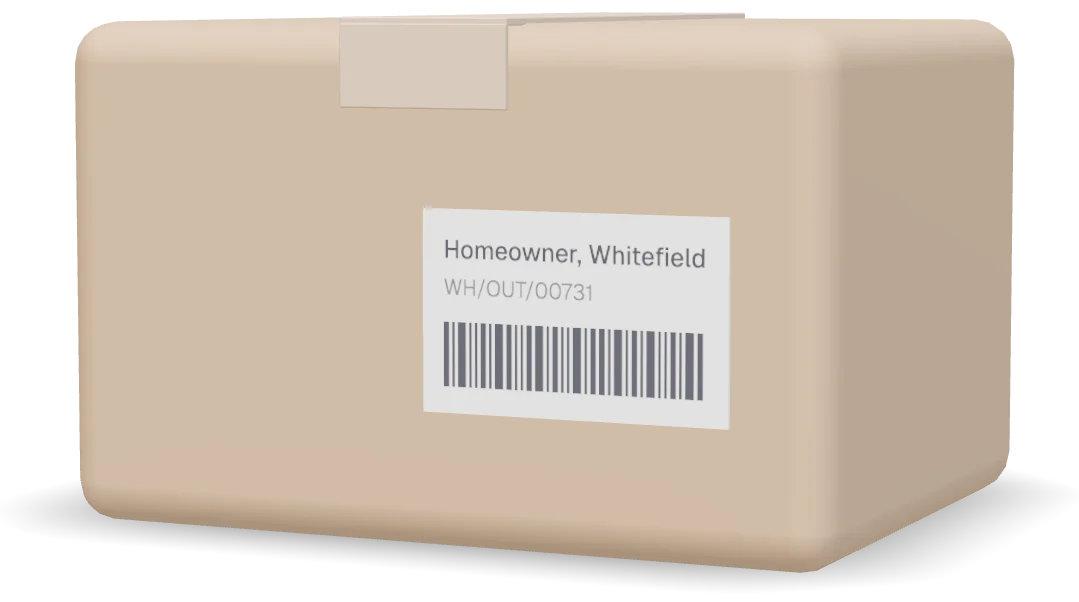 WH/OUT/00731Delivered
The final invoice deducts the advance taken in the showroom. The e-way bill comes from the delivery.
 Accounting
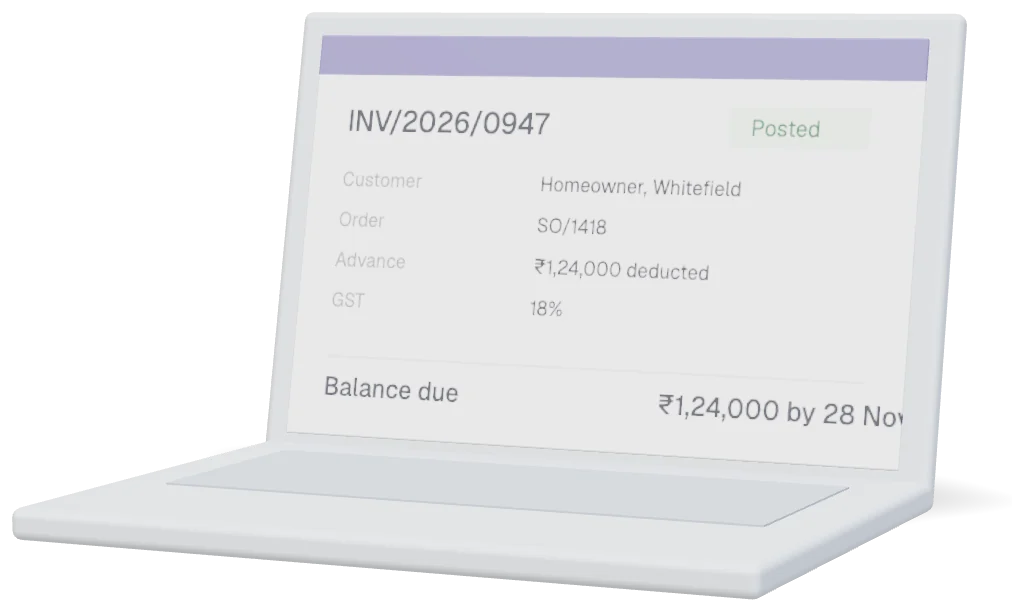 INV/2026/0947Posted
A longer sofa in a premium fabric is quoted at the standard price, and the margin goes with it.
Price every option through the configurator, with its cost behind it.
Salespeople shouldn’t be doing the costing in their heads. Once the extra is on the attribute, every quote carries it.
Sales
Offcuts and part rolls aren’t counted, so the same linen is ordered again.
Hold fabric in metres and board in sheets, with each roll as its own lot.
Most workshops already own the stock they keep buying. Counting it in the unit you cut it in is the fix.
Inventory
The salesperson promises three weeks; the workshop has five weeks of jobs ahead of it.
Plan work orders by work centre before a date is promised.
Upholstery is usually the bottleneck. Show the showroom its queue and the promises get honest.
Manufacturing
The fitters go back for hardware nobody packed, and nobody bills it.
Install from a checklist, with the customer’s sign-off on the tablet.
The checklist catches the handle at dispatch. The sign-off ends the argument about what was fitted.
Project
Board, hardware and labour go to a kitchen project and never reach its costs.
Run each site as a project with its own analytic account.
Then every issue and every subcontractor bill lands on the job, and you see the overrun while it can still be billed.
Accounting
Advances taken in the showroom are written down and matched to the final bill by hand.
Take the advance as a down payment on the sales order.
The final invoice deducts it on its own, and the customer’s balance is right on the day of delivery.
Accounting
Live in 8–14 weeks. Nothing switches off until your books agree.
Where most workshops start. Job cards on paper become manufacturing orders from the first day.
What moves across
The showroom bills and the workshop guesses. Both move onto the same orders.
What moves across
The data comes across; the workarounds built around the old system don’t.
What moves across
Yes. Each choice is an attribute with its own price extra, and the product configurator builds the variant on the quote. The bill of materials can change with the choice, so a teak finish draws teak.
Yes, with make-to-order routes. Confirming the order creates the manufacturing order, and buys whatever components aren’t in stock.
Yes. Each item has its own unit of measure, and you can buy in rolls and issue in metres. Part rolls stay as stock with their lot.
As Field Service tasks, booked after delivery, with the fitters, a checklist and the customer’s signature. Field Service is part of Odoo Enterprise.
Yes. The sales order carries the milestones, the project tracks the work, and each milestone is invoiced when it’s reached. Costs land on the project’s analytic account.
Yes. The showroom can take orders and advances through Sales or Point of Sale, and the advance is deducted from the final invoice.
Odoo’s Repairs app records each repair against the customer and the product, with the parts used. Whether it’s billed depends on the warranty, which you set per product.
Yes, through Odoo’s Indian localisation: GST on every invoice, e-invoices and e-way bills generated from the system, and GSTR returns from the same books.
Yes. We’ve moved groups off SAP and other ERPs. Masters and open balances come across, you run one month-end side by side, and you switch when the numbers agree. Planning shows where Odoo fits as it is and where it needs building.
Question not here? WhatsApp us.
A senior consultant reads every note and replies personally.
Or call +91 79750 29997 or WhatsApp us