Job work
Lot CL-0311 Crew-neck tee, navy
- FabricDye lot FB-2207, 412 kg
- Job work1,200 sent to Tiruppur, 1,188 back
- Checked1,176 passed, 12 kept as seconds
- SizesS 120 · M 360 · L 360 · XL 240 · XXL 96
- ToRetail chain, invoice and e-way bill

One style is dozens of size-colour SKUs, and the fabric is out with a job worker. Both stay counted.
Tell us how you runJob work
Buyer order
Costing
Season end

Each style is one product with its sizes and colours as variants. Buyer orders go in as a size-by-colour grid.
Fabric per size on the bill of materials, buttons and linings included. Cutting, stitching and finishing run as work orders or job work.

Every roll a lot, with its dye lot, weight and GSM. Cutting asks for one dye lot and gets it.
Stores and the website sell from one stock, by size and colour. Slow sizes show up before the season ends.
Follow one order of crew-neck tees through Odoo, from the fabric that came in to the invoice that went out.
Fabric arrives by the roll, each with its dye lot. GSM and shade are checked before anything is cut.
 Inventory
 Quality
 WH/IN/00918Done
The cutting order draws fabric from one dye lot, so the whole lot stays one shade.
 Manufacturing
 MO/0311Done
Cut panels go to the stitching unit as subcontracting. Odoo shows what is out with them and what is due back.
 PurchaseInventory
 PO/0144Received
Finished pieces are checked, seconds set aside, and the rest packed into cartons by size.
Quality Barcode
 QC/0311Done
The buyer’s order went in as a size-by-colour grid. The delivery ships the cartons that were packed.
 SalesInventory
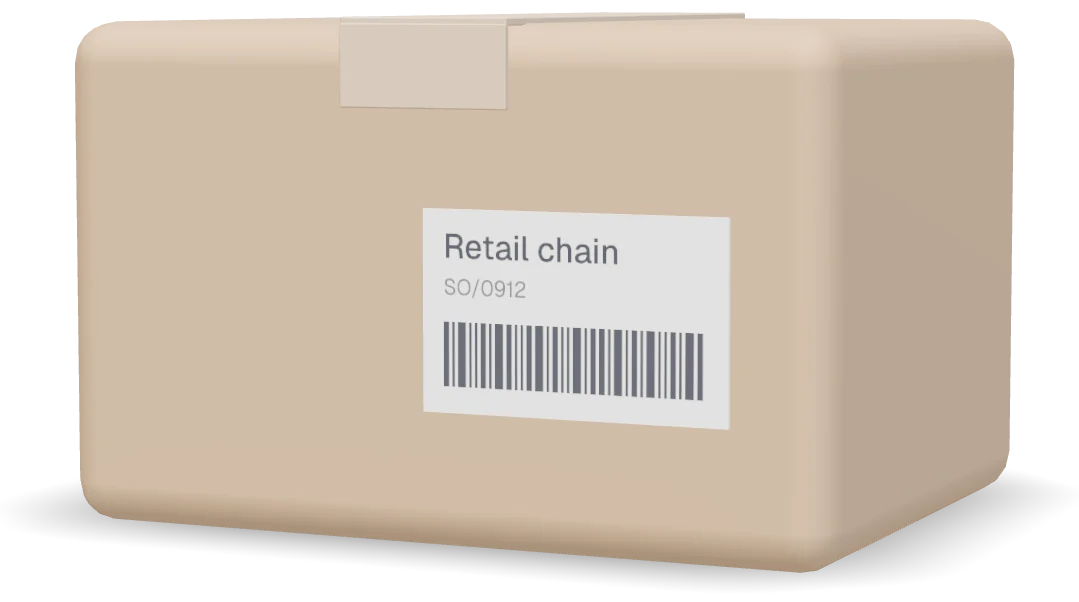 SO/0912Delivered
The GST invoice and e-way bill come from the delivery. Late payers are flagged before the next order.
 Accounting
 INV/2026/1352Posted
Rolls lie in three godowns, and the stock register says something else.
Track every roll as a lot, with its dye lot and weight.
Shade matching starts at the roll. Once each roll has a number, cutting can ask for one dye lot and get it.
Inventory
The cutting master knows the fabric per piece; the costing sheet uses a number from two seasons ago.
Put fabric consumption per size on the bill of materials.
Every cutting order then shows planned against actual, and the gap is talked about that week, not at the year end.
Manufacturing
Panels go out on a challan and come back short, and nobody reconciles it.
Run job work as subcontracting, so material sent stays your stock at the job worker.
You see what each unit holds today and what is overdue. Shortfalls are debited on their bill, not written off.
Purchase
M and L sell out while XXL sits in cartons.
Report sales and stock by size and colour, not just by style.
Variants show the pattern early enough to change the next cut’s size ratio.
Sales
Rejected pieces are sold off for cash and never reach the books.
Record a check on every lot and keep seconds as their own product.
Seconds still have a value. Counted, they are revenue; uncounted, they are a leak with an excuse.
Quality
A forty-line size and colour order is keyed in line by line, and the mistakes ship.
Enter orders on the size-by-colour grid.
A grid per style is how buyers send orders anyway, and it goes straight into the cutting plan.
Sales
Live in 8–14 weeks. Nothing switches off until your books agree.
Where most garment units we meet start. Cutting and job work registers move into Odoo from the first day.
What moves across
Strong on one part of the business, weak on job work and branches. We keep its data, not its limits.
What moves across
Common for apparel brands. Orders online, stock in a sheet, and a warehouse that guesses.
What moves across
Yes, as standard. Each style is one product with size and colour variants, each with its own barcode and price, and orders can be entered on a size-by-colour grid.
Yes. Stitching, embroidery or dyeing sent out runs as subcontracting: the material you send is tracked at the job worker, and their bill comes against the purchase order.
With some set-up. The challan prints from the delivery to the job worker. ITC-04 is not standard in Odoo, so we build it as a report from the same records.
Each product keeps one unit, usually kilos for knits and metres for wovens, and each roll is a lot with its own quantity. Converting kilos to metres by GSM needs a small customisation.
Yes. One bill of materials per style, with lines that apply only to certain sizes, so an XXL draws more fabric than an S.
Yes. Each roll is received with its lot, and the cutting order picks fabric from one lot, so a cut stays one shade.
Yes, through Odoo’s Indian localisation: GST on every invoice, e-invoices and e-way bills from the system, and GSTR returns from the same books. Garment rates that change with the selling price need a small rule set up.
Yes. Point of Sale and the Odoo website draw on the same inventory by size and colour, so a piece sold in the store isn’t sold again online.
Yes. We’ve moved groups off SAP and other ERPs. Masters and open balances come across, you run one month-end side by side, and you switch when the numbers agree. Planning shows where Odoo fits as it is and where it needs building.
Question not here? WhatsApp us.
A senior consultant reads every note and replies personally.
Or call +91 79750 29997 or WhatsApp us